


I’m often asked which is better – a kayak or a stand up paddleboard? If you asked me this a decade ago I’d scoff as I wedged myself back into my kayak. If you asked me five years ago I’d scoff as I clambered back on my racing SUP. But since you are asking me today I’ll give you the answer we all love to hate…
It depends!
Choosing whether to SUP or kayak is ultimately going to come down to personal preference, but there are some pros and cons to each type of watercraft.
But whether you prefer SUPs or kayaks, we can all agree – let’s not get a canoe 🤣
Stand Up Paddleboards are Better than Kayaks
I think there are two core reasons why SUPs are superior to kayaks – especially for recreational paddlers.
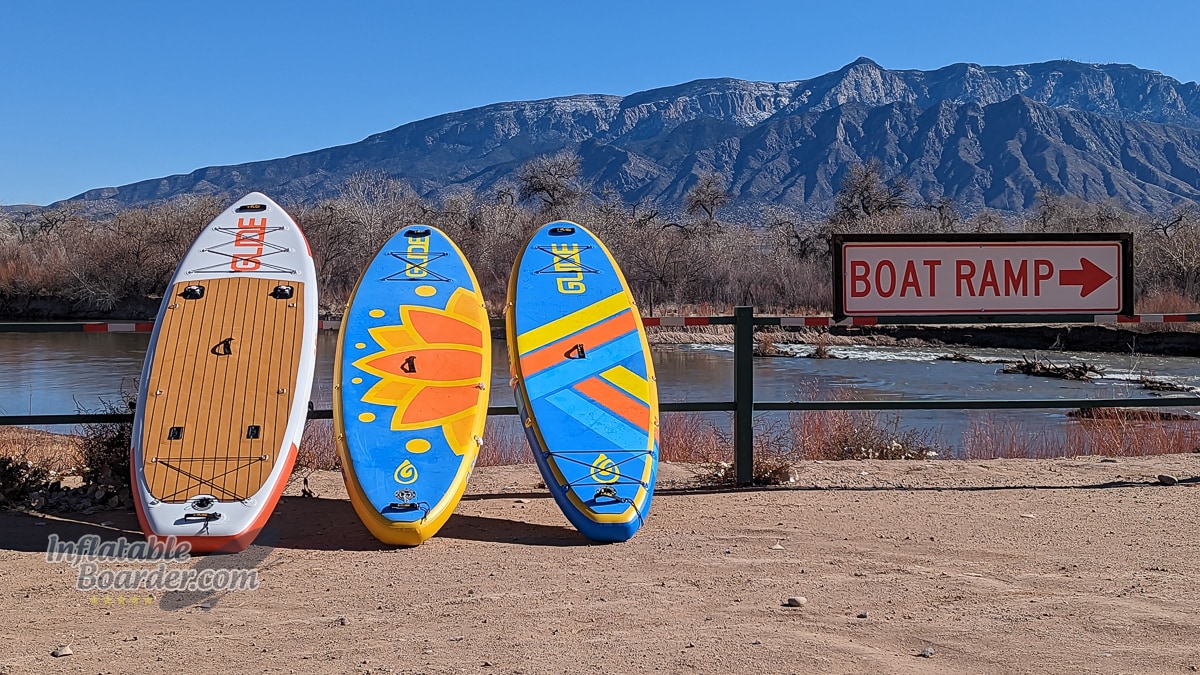
SUPs can offer versatility, comfort, and storage/transportation advantages over kayaks.
First, and most important, is that a SUP offers more versatility in use than a kayak. Most kayaks limit you to sitting in a very specific location on the boat and that’s it. Some larger kayaks offer a couple of options in layout, but for the most part everything is locked in place. And good luck standing up in most kayaks.
SUPs, on the other hand, allow you to stand, kneel, sit, or lay down on a whim. You can add seats and foot braces, you can arrange yourself (and your friends/kids/pets) however you like on the board. Some SUPs, like the Glide Retro Elite, even come with kayak conversion kits to give you that versatility right out of the box.
Second, paddle boards, especially iSUPs, offer easier transportation and storage options compared to kayaks. iSUPs in particular are almost always lighter and smaller when packed up (barring some packrafts and ultralight kayaks). Even hard shell SUPs are generally lighter (average around 30 lbs) and easier to store and transport compared to hard shell kayaks (average around 50lbs).
Lastly, most iSUPs can be shipped to your door and come as a complete kit with pump, paddle, and other accessories at a very reasonable price (the average price of iSUPs we’ve reviewed on inflatableboarder is about $600). Most kayaks, except ultra cheap inflatable kayaks that we do not recommend, are more expensive and very rarely come with paddles or other accessories.
Kayaks are Better than Stand Up Paddleboards
Kayaks offer a few key benefits that SUPs don’t, especially for specialty use.

Kayaks can offer performance and capacity benefits for more advanced users.
For a recreational paddler, the two biggest Pros for kayaks over SUPs are the overall capacity of the boat and initial stability.
Kayaks, especially inflatable kayaks, tend to be much wider than SUPs (34-38” vs 30-34”) and combined with their required seated position offer far more initial stability for beginner paddlers. The larger sizes and high-volume air chambers also generally have higher overall weight capacities than a typical all-around iSUP.
But the biggest benefits of a kayak over a SUP come into play with specialization. There are definitely specialized SUPs – touring SUPs, racing SUPs, whitewater SUPs, etc. However, all of these specialty boards are limited in their overall shape and utility by their intended use standing up.
Kayaks, especially hard-shell kayaks, offer far more design options since they don’t have to accommodate a standing paddler. They can also more easily be designed for things like expeditions with separate bulkhead compartments. And kayaks can be used more easily in extreme conditions – like open ocean and whitewater – because you can completely seal yourself into the boat and even roll the kayak back upright after you capsize.
Which is Better – Kayaks or SUPs?
Like I said at the top of this blog post, the true answer is going to come down to your personal preference and how you plan to use it. For the majority of paddlers who want a recreational/all-around paddle craft, there are no distinct advantages to one over the other. As you progress into more advanced paddling, then each type of craft has its own specific set of advantages and disadvantages.
Which do you prefer – kayaking or paddleboarding? Let us know in the comments!



Leave a Reply